Showing posts with label Books. Show all posts

Wednesday, September 16, 2020

The Room Where it Happened by John Bolton

 The Room Where It Happened
John Bolton
Simon & Schuster, 592 pp.

Review by David Williams


In the second act of the hit musical Hamilton Aaron Burr sings us the story of the famous Madison/Hamilton compromise that led to the passage of Hamilton’s economic plan and to the US Capital being located on the banks of the Potomac. We
know of the story primarily from the recollections of Thomas Jefferson, who naturally puts himself at the center. The compromise happened at a dinner for the three men hosted by Jefferson. Was this really what happened? We will never really know because, as Burr sings “No one else was in the Room where it happened.”  In contemplating the results Burr goes on to point out that

No one really knows how the game is played
The art of the trade
How the sausage gets made
We just assume that it happens
But no one else is in
The room where it happens 

In his new book former National security advisor John Bolton draws back the curtain and show us The Room Where it Happened. It is a fascinating and rather depressing look at the inner workings of the Trump White House. When the book was first announced there was a giant clamor among people who had not read the book. Everyone thought it was going to be a tell all. Both Trump critics and Trump fans expected the book to be a salacious tell all full of dirty details. The Trump critics couldn’t wait for the expose. Finally, they would have the dirt that should have been available at the impeachment. Trump supporters prepared by declaring everything in the book that they had not read to be “fake news” and nothing but lies. The truth was actually far more mundane.

During the trial of Adolph Eichmann the philosopher Hannah Arendt coined the term “The banality of evil” to describe men like Eichmann who take part in a great evil, but make the evil sound almost tedious and boring. Bolton’s book could almost be subtitled the Banality of Incompetence. If you are looking for Donald Trump, Evil Genius then you will be very disappointed in this book. The Trump that you see here isn’t so much diabolical as simply incompetent and completely over his head. This should not be a big surprise to anyone who has observed Trump’s career over the years. The sheer boringness is in many ways the worst part of the book. Yes, there are some salacious stories here. Most of the book is not salacious, it’s just the tediousness of a White House that has no actual direction other than the whim of Donald Trump.


If you want a typical story from this book a good example would be the talks between Trump and Kim Jong Un. During their first meeting Trump mentioned his calling Kim “Rocket Man” and learned that Kim did not know the Elton John song. When Trump sent Mike Pompeo to engage in the next round of talks he autographed an Elton John Greatest Hits CD as a gift for Kim. During the phone debrief after Pompeo left the talks “Trump didn’t seem to realize Pompeo hadn’t actually seen Kim Jong Un, asking if Pompeo had handed over the Trump-autographed copy of Elton John’s “Rocket Man” CD, which Pompeo had not. Getting this CD to Kim remained a high priority for several months.”  This is a typical story.

Another good example is a little more dangerous. During a conflict with Turkey there was an impasse. The solution came from Mike Pence:  “the Vice President suggested Jared Kushner call Turkey’s Finance Minister, since they were both sons-in-law of their respective countries’ leaders. Really, what could go wrong? I briefed Pompeo and Mnuchin on this new “son-in-law channel,” and they both exploded, Mnuchin because the Turkish son-in-law was Finance Minister, his counterpart, and Pompeo because this was one more example of Kushner’s doing international negotiations he shouldn’t have been doing (along with the never-quite-ready Middle East peace plan). I always enjoyed bringing good news.” Pence suggesting that foreign policy be handled by members of “the family” is so typical of this administration that we almost forget that the US government is not some third world dictatorship or a mob family and this is not how things are supposed to work.

The Room Where It Happened is a memoir, it is not a book that has been researched by a third party. This means that it is very much written from Bolton’s perspective and with his own prejudices. His likes and dislikes come through. He was obviously not close to UN Ambassador Nikki Haley or to Secretary of Defense Jim Mattis. On the other hand, you see him working closely with John Kelly and Mike Pompeo. These personal feelings are quite apparent and they should be taken into account when reading the book. Bolton’s writing is not florid. It is very straight forward. In many ways you almost get the feeling that immediately after every meeting Bolton went straight to a quiet place and wrote down his notes. The book was little more than filling in a few blanks in the notes and framing the narratives. Trump people deny the unflattering portrait of the President in the pages, but the stories ring true. In the end we may never know what happened in these rooms. But the straight ahead look at Trump’s dysfunctional foreign policy shows us that a lot of damage control will be necessary in the years ahead.

I can’t mention a Hamilton song and then not give you a chance to listen.


Tuesday, January 15, 2019

Out of the Dark by Gregg Hurwitz (Orphan X)


Release Date: January 29, 2019
Minotaur Books

Evan Smoak is the Nowhere Man. A man who moves in the shadows and helps people. He is also the former assassin Orphan X. In Out of the Dark he is back and ready for his most difficult and dangerous assignment yet. He is going to kill the President of the United States. When he was twelve years old Smoak was taken from a foster home and trained to become part of a deadly black operations force. The Orphan program produced the deadliest assassins and prepared them to serve their country. When Evan decided to leave they powers behind the program attempted to terminate him. In the previous books we learned that Evan wasn’t the only target of termination. All of the Orphans had been targeted. The man who issued the orders to terminate Orphan X was the President of the United States. All Evan knows is that the reasons are attached to his first mission. For some reason something attached to that mission is viewed as dangerous to the career of the current President. So Evan realizes that the only way to make himself safe is to kill the President before he is killed.

The Orphan X novels are enjoyable. They keep the pages turning. This newest book in the series is no exception. Gregg Hurwitz does an excellent job in each novel developing the character a little more each time. Evan Smoak is not just a two-dimensional cutout. He is a fascinating character who develops a little more each time we meet him. Smoak is flawed. His training leaves him unable to engage in normal human relationships. He doesn’t know how to navigate the world of dating. We feel Evan’s loneliness and we can’t help but hope that somehow he will end up with Mia and Peter. In some of the Orphan X novels the pacing has been slow. Not so in this novel. The pace is fast and the action is always moving. It is a great addition to the series. Definitely the best book to date. I look forward to more Orphan X books in the future.  


Thursday, January 10, 2019

Odysseus Awakening by Evan Currie


Odysseus Awakening is the sixth novel in Evan Currie’s ongoing Odyssey One series. The story picks up a few months after the events in the prior novel. The Empire is now probing into the Priminae territory. Eric Weston is now the Commodore of a task force that has been assigned to monitor the actions of the Empire. 

In the meantime the Odysseus is experience some strange anomalies. There is a prankster on board causing trouble. Commodore Weston has to figure out how to deal with all of these issues while preparing to go up against the newest enemy. A chance encounter between a Priminae ship and the Imperial Fleet cascades into a space battle pits the Priminae and Terran forces against the Empire. 

That is about all there is to say about this particular book. The book is a nearly 300 page space battle. It is thrilling and fun. You keep turning the pages to see what happens next. Except for one fascinating point there really isn’t anything resembling plot or character development. Just non-stop space battle action. The book feels more like a transition between the previous book and the next one in the series. This is not uncommon for this series. It seems like the books alternate between setting up the story and an all-out battle. I have little doubt that the next book in the series will move the story along. The series is quite enjoyable and recommended.


Tuesday, January 8, 2019

John Marshall by Richard Brookhiser


John Marshall is one of the most consequential figures in the history of the United States, yet too little is known about him. In John Marshall : The Man Who Made The Supreme Court, journalist and author Richard Brookhiser seeks to help us know more about this man. In life Marshall was an unimposing character. Early in the book Brookhiser relates a story about Marshall at home in Richmond. He was dressed like any other rustic. A newcomer to town asked him to carry a turkey home from the market, not realizing until afterwards that he had used the Chief Justice of the Supreme Court as a delivery man. Marshall was a man of humor.  Brookhiser shares another anecdote in the book. The Justices would board in the same house when the Court was in session and they ate together. They established a custom that they could only have wine if it was raining. “Marshall would ask ‘Brother Story’ [Justice Joseph Story] to look out the window and say what the weather was. If Story reported that the sun was shining, Marshall would answer, ‘our jurisdiction extends over so large a territory…that it must be raining somewhere.’” 

These anecdotes help to remind us that Marshall was an approachable and affable man. That did not make him weak. In his Introduction Brookhiser points out that “When Marshall died in 1835, he and the Court he led had rebuked two presidents, Congress, and a dozen states and laid down principles of law and politics that still apply.” That, of course, is why we know Marshall. He was the man who turned the Supreme Court into a powerful part of the United States government. Before Marshall the Supreme Court had little influence on the nation. After Marshall the influence was powerful.

The book is well written and easily approachable by the general reader. Brookhiser is a journalist by training and profession so he does not get into the weeds of trying to explain all of the minutiae behind the laws. Instead he focuses on the political implications of Marshall’s rulings. This is important because when Marshall established the idea of judicial oversight he inserted the Court into the politics of the new nation. Marshall was well aware that he was helping to guide the nation forward. He was a Revolutionary War veteran who had served on Washington’s staff.  As a young member of the Virginia Ratifying Convention he fought hard alongside James Madison for the ratification of the Constitution.  He was a successful attorney in private practice before moving into the government. He served under John Adams as Secretary of State before he became the third Chief Justice. Brookhiser takes us through his early years without succumbing that siren call of the historian: the rabbit trail. So many writers feel a need to set up a history by giving huge back stories or going off into minute detail about some side issue. Brookhiser deftly gives us what we need to understand the subject and keeps moving.

This is an excellent book and does justice to the subject. It also delivers the reader a well written, informative, and enjoyable experience.


Monday, January 7, 2019

2018 - A Year in Reading


Here is the completed reading list for 2018. It was a great year. 168 books 61,113 pages read.


The Lost Kings - Amy Licence
Dodge City - Tom Clavin
A Connecticut Yankee in King Arthur's Court - Mark Twain
Babbit - Sinclair Lewis
Last Stand at Saber River - Elmore Leonard
Matagorda - Louis L'Amour
Appaloosa - Robert B. Parker
Kingdom of Speech - Tom Wolfe
20,000 Leagues Under the Sea - Jules Verne
Fools and Mortals - Bernard Cornwell
Resolution - Robert B. Parker
Oedipus Plays - Sophocles
U. S. Marshals - Mike Earp
Hillbilly Elegy - J. D. Vance
A Midsummer Night's Dream - William Shakespeare
Brimstone - Robert B. Parker
Sins of the Father - Lawrence Block
Time To Murder and Create - Lawrence Block
The Last Gunfight - Jeff Guinn
The Late Show - Michael Connelly
In The Midst of Death - Lawrence Block
The Moonstone - Wilkie Collins
Blue-Eyed Devil - Robert B. Parker
Iron Horse - Robert Knott
Bull River - Robert Knott
The Force - Don Winslow
The 39 Steps - John Buchan
Midnight at the Bright Idea Bookstore - Matthew J. Sullivan
12 Rules for Life - Jordan Peterson
Rooster Bar - John Grisham
Crisis of Responsibility - David Bahnsen
Norse Mythology - Neil Gaiman
IQ - Joe Ide
Trigger Warning - Neil Gaiman
Righteous - Joe Ide
A View From The Cheap Seats - Neil Gaiman
Tinker, Tailor, Soldier, Spy - John LeCarre
All The Pretty Horses - Cormac McCarthy
An Unlikely Trust - Gerard Helferich
American Gods - Neil Gaiman
The Great Debate - Yuval Levin
Wuthering Heights - Emily Bronte
My Antonia - Willa Cather
The Innocent - David Baldacci
The Hit - David Baldacci
Dynamite Road - Andrew Klavan
The Pirate Coast - Richard Zacks
Nowhere Man - Gregg Hurwitz
Shotgun Alley - Andrew Klavan
The Bloody Spur - Mickey Spillane
The Target - David Baldacci
Dangerous Women - Otto Penzler, ed.
Princess and the Goblin - George MacDonald
Camino Island - John Grisham
Black Echo - Michael Connelly
The Second World Wars - Victor Davis Hanson
Coolidge - Amity Shlaes
The Throne of Caesar - Steven Saylor
The Guilty - David Baldacci
Death of Caesar - Barry Strauss
Beautiful Ruins - Jess Walker
Memory Man - David Baldacci
A Confederacy of Dunces - John Kennedy O'Toole
March Violets - Philip Kerr
Black Ice - Michael Connelly
A Separate Peace - John Knowles
The Last Mile - David Baldacci
Unsub - Meg Gardiner
The Fix - David Baldacci
New York Dead - Stuart Woods
Hellfire Club - Jake Tapper
Concrete Blonde - Michael Connelly
Last Coyote - Michael Connelly
The Hunter - Richard Stark
The Escape Artist - Brad Meltzer
The Man With The Getaway Face - Richard Stark
Hellbent - Gregg Hurwitz
Dirt - Stuart Woods
Trunk Music - Michael Connelly
Of Mice and Men - John Steinbeck
End Game - David Baldacci
Angels Flight - Michael Connelly
Dead In The Water - Stuart Woods
Discrimination and Disparities - Thomas Sowell
The Whistler - John Grisham
Day of the Jackal - Frederick Forsythe
Swimming to Catalina - Stuart Woods
Macbeth - Jo Nesbo
Emma - Jane Austen
Dead Lock - Damien Boyd
Cuckoo’s Calling - Robert Galbraith
Ivanhoe - Walter Scott
Silkworm - Robert Galbraith
The Fallen - David Baldacci
Citizen Soldiers - Stephen Ambrose
Split Second - David Baldacci
Ayesha - H. Rider Haggard
Tevye The Dairyman - Sholem Aleichem
Career of Evil - Robert Galbraith
Hour Game - David Baldacci
A Darkness More Than Night - Michael Connelly
City of Bones - Michael Connelly
The Thief - Fuminori Nakamura
Lost Light - Michael Connelly
The Narrows - Michael Connelly
Spymaster - Brad Thor
The Lincoln Lawyer - Michael Connelly
The Closers - Michael Connelly
Simple Genius - David Baldacci
First Family - David Baldacci
Echo Park - Michael Connelly
Overlook - Michael Connelly
The Sixth Man - David Baldacci
Brass Verdict - Michael Connelly
King and Maxwell - David Baldacci
9 Dragons - Michael Connelly
The Reversal - Michael Connelly
The Drop - Michael Connelly
The Fifth Witness - Michael Connelly
The Black Box - Michael Connelly
Sex Matters - Mona Charen
Gods of Guilt - Michael Connelly
The Burning Room - Michael Connelly
The Crossing - Michael Connelly
The Wrong Side of Goodbye - Michael Connelly
Two Kinds of Truth - Michael Connelly
The Wrecking Crew - Kent Hartman
Suicide of the West - Jonah Goldberg
Price of Greatness - Jay Cost
All The King’s Men - Robert Penn Warren
The Other Woman - Daniel Silva
The Collected Stories - Eudora Welty
Depth of Winter - Craig Johnson
How In the Hell Did This Happen? - P. J. O'Rourke
There’s Something I Want You To Do - Charles Baxter
The Sun Also Rises - Ernest Hemingway
1984 - George Orwell
The Hobbit - JRR Tolkien
The Fellowship of the Ring - JRR Tolkien
The Two Towers - JRR Tolkien
The Return of the King - JRR Tolkien
The Silmarillion - JRR Tolkien
Little Fires Everywhere - Celeste Ng
The Devil In The White City - Erik Larson
Melting Pot or Civil War - Reihan Salam
Circe - Madeline Miller
Wrecked - Joe Ide
Mortal Republic - Edward Watts
Abraham Lincoln: The Prarie Years and the War Years - Carl Sandburg
Redeeming The Great Emancipator - Allen C. Guelzo
Lethal White - Robert Galbraith
The Ways of the World - Robert Goddard
The Corners of the Globe - Robert Goddard
The Ends of the Earth - Robert Goddard
Dark Sacred Night - Michael Connelly
Witch Elm - Tana French
Reconstruction - Allen C. Guelzo
The Outfit - Richard Stark
The Mourner - Richard Stark
Long Road To Mercy - David Baldacci
The Score - Richard Stark
The Jugger - Richard Stark
The Seventh - Richard Stark
Winter in Paradise - Elin Hilderbrand
The Reckoning - John Grisham
The Blood of Alexander - Tom Wilde
Odysseyus Awakening - Evan Currie
Odysseyus Ascendent - Evan Currie

Thursday, January 3, 2019

Upcoming Reviews

Here is a look at the reviews that are coming up in the next few weeks:

John Marshall by Richard Brookhiser
The Reckoning by John Grisham
Odysseus Awakening by Evan Currie
Unexampled Courage by Richard Gergel
The Point of it All by Charles Krauthamemer
History of Russia and Eastern Europe
Out of the Dark by Gregg Hurwitz
Dark Sacred Night by Michael Connelly
Havana Game by John Lutz


There is a little of everything here. Some history, some mystery, some thrillers, and some science fiction. I can't wait to share it all with you.

The Blood of Alexander by Tom Wilde

How to describe Blood of Alexander by Tom Wilde? It is a modern day, high tech, caper, thriller, adventure, spy, crime novel. It is not really any of those things. It is a mashup of them all. The novel opens with our hero, Jonathan Blake, visiting the site of the Buddhas of Bamiyan. These 6thcentury statues were destroyed by the Taliban in early 2001. Our hero is here to purchase a stolen artifact from a local warlord and opium dealer. The scene is reminiscent of a classic James Bond opening. Complete with a double dealing arms dealer and a dramatic escape.

It turns out that our hero works for the Argo Foundation,  a private organization that is dedicated to the preservation of historical artifacts. It does so through means both legal and extralegal. Blake is the prime operative on the less than legal side. His job is to find stolen artifacts and steal them from the thieves. This is not an altogether altruistic organization. They turn around and either gain the insurance money, or sell the item to private donors who will preserve the artifacts.

Unfortunately for our hero the US government learns of his abilities and forces him to help them track down a mysterious character named Vanya. Vanya is a villain right out of the James Bond playbook. He has seemingly unlimited financial resources, minions, his own private island, yacht, and helipad. He has a deadly female right hand. All he wants is to take over the world using secrets that he will find in the tomb of Alexander the Great.

The story unfolds very much like a James Bond film. Yes, this is the third time that I’ve mentioned Bond because the pacing, hero, and villains are all reminiscent of a James Bond film. The hero is constantly getting into impossible situations and escaping through improbable means. After a while you find yourself wait for the next moment of betrayal or amazing escape. There is also a little of Clive Cussler here because you have the expert in artifacts along with the slightly strained re-writing of history.

Over all the book is very enjoyable. The pacing is fast and the characters are fun if not overly developed. If you love James Bond movies from the early Roger Moore era then I think that you will find a lot to enjoy in this novel. I certainly hope that Wilde will write more of these books in the future.
 Please remember that this site is provided at my own time and expense. Clicking on the links here to buy books helps me to do this.

Tuesday, January 1, 2019

Happy New Year!!!

Happy New Year everyone! It is a new year and a new start. After a few years absence and a few false starts I am relaunching this blog. I hope to have a lot of great books to share with you this year. I am already queuing up some reviews. I plan to spend a little time also talking about the general love of reading. My interests are many and varied and this site will reflect those interests. So jump on in and join me. I hope sometime this year to start a podcast on the love of good books. We will see if it happens.

Saturday, November 17, 2018

Mortal Republic by Edward Watts

Popular histories of the fall of the Roman Republic are not in short supply. There are excellent entries in this crowded field. One can look to Tom Holland’s Rubicon or the recent New York Times bestseller The Storm Before the Storm by popular podcaster Mike Duncan. Into this crowded field we have Mortal Republicby Edward J. Watts.  Dr. Watts is Professor of History at the University of California, San Diego. His previous works have focused on the period of late antiquity and the clashes between pagan and Christian culture. In his newest work Dr. Watts examines the forces that brought about the end of the Roman Republic. 

This book does not start, as is common, with the rise of the Gracchi brothers. Those radical reformers whose lives and deaths plunged the Republic into short periods of chaos. Instead he begins in 280 BC, with the wars between Rome and the Greek King Pyrrhus. Why this period? He wants to show the nature of the Roman leaders in this period. Roman leadership was a duty that was held by men who held honor above wealth.

This is an important point that will be seen throughout this book. In the early days of the Republic the nobles of Rome “agreed that virtue lay in service to Rome and that dishonor fell upon those who put their private interests above those of the Republic.” This noble ideal would become stressed as the Roman Republic grow in size, power and wealth. The change can be seen as the Romans fight the Carthaginians for control of Sicily. The Punic Wars spread Roman power abroad and soon the Republic had foreign territories to manage. With those territories came officials needed to run them. Those officials tended to become wealthy in those jobs. That wealth became the new motive for public service. Now honor gave way to avarice. As the quest for wealth and glory became the prime motivator factions began to arrive. Those factions would eventually wear away at the fabric of the Republic until it frayed and crumbled.

This did not happen in one lifetime. It took almost two centuries for the ethics and values of the Romans to devolve to the place where strong men like Sulla, Marius, Pompey, and Caesar could tear it apart. The great weakness in the Roman system was the reliance on personal honor to maintain itself. Tradition and honor were no defense against personal ambition and tremendous wealth.

The book is written for the general reader. One does not need a specialized background in Roman history to understand. The topic is indeed timely. In the Preface to the book Dr. Watts hopes “that this book allows its readers to better appreciate the serious problems that result both from politicians who breach a republic’s political norms and from citizens who choose not to punish them for doing so.” That is as far as he goes in trying to connect the past and the present. It is up to the readers to notice the signs and to take warning. 

The book ends as did the Republic: with the reign of Augustus. For over half a century the Republic had been torn by one faction after another competing for power. What are we supposed to gather from this book? Why read another book on the fall of a government that fell 2,000 years ago? Because the freedoms and laws of a republic must continually be upheld and protected.  Ronald Reagan famously said “Freedom is never more than one generation away from extinction.” Perhaps the closing statement of the book sums it up best. “When citizens take the health and durability of their republic for granted, that republic is at risk. This was as true in 133 BC or 82 BC or 44 BC as it is in AD 2018. In ancient Rome and in the modern world, a republic is a thing to be cherished, protected, and respected. If it falls, an uncertain, dangerous, and destructive future lies on the other side.”


Monday, October 16, 2017

Banned In Biloxi

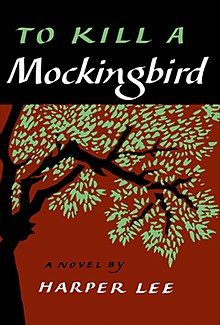
This year Banned Books Week was held September 24 – 30. During that time period we are supposed to take time to think about the great books that have suffered at the hands of the insufferable. Maybe we will even read one of these books. At least I hope that you will. If that was a few weeks ago then why am I talking about it now? The school board in Biloxi, Mississippi has decided, right after Banned Books Week, to ban a book. “What book is it this time?” we all ask with a groan. It is To Kill A Mockingbird. The classic 1960 work by the late Harper Lee. This novel is no stranger to controversy and has been banned before. Shortly after its publication the novel was banned in Hanover County, Virginia because it featured a trial about a rape.

Why is it under attack this time? It contains a word that “makes some people uncomfortable” says school board Vice President Kenny Holloway. This word is, of course, the pejorative “N” word used against African-Americans. In other words, it uses the word “nigger.” Did that make you uncomfortable? I hope so. It is an uncomfortable word. None of us should be comfortable when we hear or see that word used. That is exactly what Harper Lee was trying to convey when she wrote this masterpiece.

Great literature is not supposed to make you feel comfortable. It can be enjoyable, it should be challenging, it is almost always uncomfortable. Do you find comfort in Crime and Punishment? What about the Odyssey? Was 1984 a light read? Uncle Tom’s Cabin, now there was a cheery story that never challenges its readers. All good literature discomforts the reader. It stretches you. It confronts you with ideas, characters, and stories that move you out of your comfort zone and force you to confront something. That something could be a darkness that is within your society, your family, or within you.


Literature has a way of challenging us. Michael Gerson, writing an opinion piece in the Washington Post last year, said “Abraham Lincoln called Harriet Beecher Stowe, the author of Uncle Tom's Cabin, the "little woman who wrote the book that started this great war." While not responsible for starting it, Lee was the little woman who made the values of the civil rights movement — particularly a feeling for the god-awful unfairness of segregation — real for millions.” How does Lee do this? She does it by showing us the ugliness of racism through the eyes of a child. Scout is an innocent. She doesn’t see the ills of society. We see those ills through her eyes. We see the ugliness of racism and hate through those innocent eyes. We see this and we are appalled at what we see. More than that we are appalled that a child must see these things. We don’t smile away the use of racial pejoratives. We see them in their stark ugliness when we compare them to the innocence of Scout. In this way white readers across the United States were forced to confront the ugliness of racism in our own nation.


To Kill A Mockingbird has the same impact today. We see the evil of racism. Not diluted in a way to make us comfortable, but in its stark and brutal ugliness. For nearly six decades this work of literature has confronted school children and adults with this ugliness. It asks us “what is in your heart?” Fifty-seven years later we are still discussing the treatment of African-Americans by the police. We don’t need to feel comfortable. We need to be roused from our comfort. If racist language makes you feel uncomfortable that is good. Don’t hide from it. Look it squarely in the eye. Great literature is a window into the past and into our souls.  Allow the literature to awaken what Abraham Lincoln called the “better angels of our nature.”